
AUTOMATED BURNERS: BIOFIRES’ BUYING GUIDE
Bioethanol automated fireplaces are extremely modern. So much so that many people might be unfamiliar with these products and puzzled when it comes to purchasing one. Well, of course, we are here to provide some guidance.
In this niche market, there are not many manufacturers in Europe and in the world, and certainly Planika is a brand that is very popular in the UK currently. This is a Polish manufacturer of bioethanol, gas, and water vapour burners and fireplaces.
Their range is varied, but when it comes to bioethanol, Planika has the longest experience in automated burners, and no surprise that theirs is also the most advanced technology, which is called BEV – Burning Ethanol Vapours.
Such technology is the most sophisticated and surely provides the best optimization in terms of consumption and heat output. However, it also requires rooms with proportionate minimum cubature and minimum distances from devices, that not always match the original project the client had in mind.
Another European high-end company BioFires works with is Glammfire, a premier Portuguese manufacturer of bioethanol, gas, wood burning, electric and water vapour burners, fireplaces, and barbeques. Their range is also wide and varied and their style is definitely very artistic. Regarding their automated bioethanol burners, the technology they use is classic, meaning that the flame is produced directly from the burning liquid and not from vapour. Even though these burners do produce a lot of heat, compared to Planika, their output is slightly reduced, but on the other end, this allows more flexibility in terms of minimum room cubature and distances from devices.
As mentioned, Planika and Glammfire offer a large variety of solutions. You can choose the product that works best for you amongst various sizes, flame power and heat output levels, customisable features, different settings options, and, finally, price ranges.
But how do you choose which burner works best?
Well, there are a couple of things that you need to take into consideration to begin with:
- Whether you need an indoor or outdoor fireplace
- In case of indoor settings, you need to check your room size
- How long the fireplace is going to be in use during the day
- Whether it will be a media wall fireplace
- Your ideal budget
INDOOR OR OUTDOOR
While, generally speaking, gas fireplaces and fire pits or wood burning barbeques are most commonly used in outdoor settings, both Planika and Glammfire have interesting bioethanol solutions that you may like to consider. Their outdoor models provide warmth and cosiness together with aesthetically pleasing designs and finishes. The choice much depends on the use you are going to make of your outdoor fireplace, of course. For example, you need to take into consideration that bioethanol fires are mainly decorative; their heat output is lower than gas or wood-burning fires, and they are not suitable for applications such as cooking. They are the least polluting, though they still produce a nice real flame and heat, and they do not require maintenance of any sort.
ROOM CUBATURE REQUIREMENTS FOR INDOOR SETTING
Bioethanol fireplaces generate a clean burn, and this is the reason why they do not need a chimney. However, like any other fire that stems from combustion, bioethanol ones also take oxygen from the room. Therefore, automated burners usually feature oxygen detection sensors and switch off automatically in case it gets too low. Consequently, you do want to check what your room cubature is (width, height, length), so that you can choose the most appropriate burner size and output.
COMMERCIAL OR RESIDENTIAL USE
As mentioned above, bioethanol fireplaces are mainly decorative, but compared to manual ones, automated models can produce a lot of heat depending also on the size of the burner, of course. Normally, commercial settings need their fireplaces to stay on longer, due to their opening times, and also because of their wider environments, for example, hotel halls, spa swimming pools, restaurants lounges, etc. Generally speaking, commercial settings require larger sizes, and in such projects, it is important to consider also a proportionate balance between the fireplace and the air conditioning, as larger burners do produce a lot of heat.
For residential settings instead, smaller sizes are often sufficient, as average living rooms nowadays are 12-30m² (approx. 30-75m³), and most people would use their fireplace for entertainment, which means a couple of hours a day during the coolest seasons. If the project includes an open-plan layout, then larger sizes could be used as well, but again, always bearing in mind the amount of heat that automated burners can produce, as also in residential properties there are central heating or air-conditioning systems.
MEDIA WALL OR NOT MEDIA WALL, THIS IS THE QUESTION
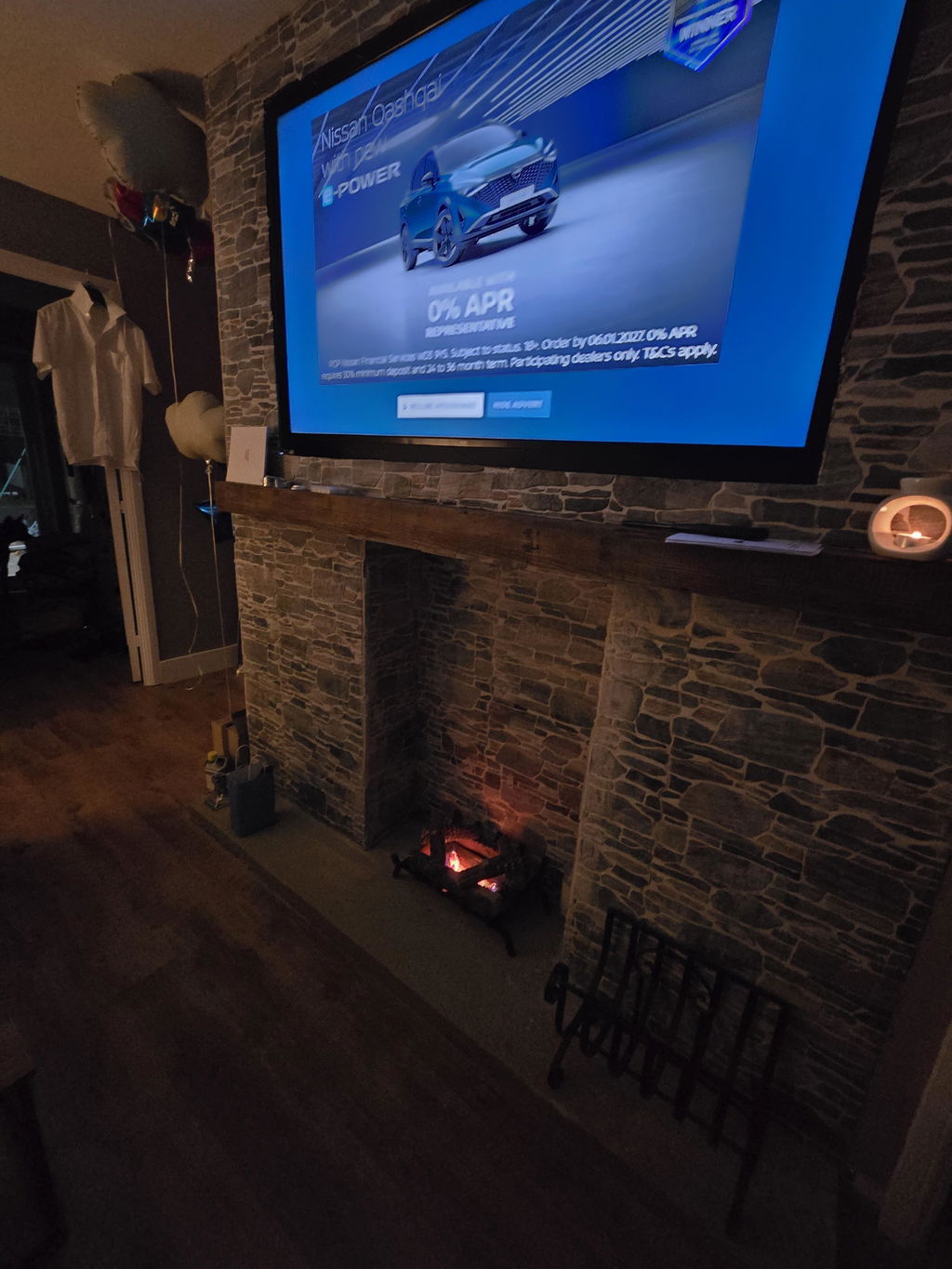
Another tricky aspect when choosing an automated bioethanol burner for your living room concerns the TV you want - or maybe not – to place above it. Placing a television above a fireplace is, in fact, an operation that implies considering more critical points, such as the height of the television on the wall -as usually, you want to watch TV from a seated position- the building materials and the design features surrounding the fireplace and the electronic devices, and the minimum distance – required by the manufacturer - between the flame and the TV so that the latter doesn’t get damaged by the heat.
DO YOU HAVE AN IDEAL BUDGET IN MIND?
Finally, you need to be aware that, compared to most manual models, automated bioethanol fireplaces are not exactly that inexpensive. The main reason is of course the sophisticated technology they feature, which allows for best optimization of fuel consumption, a more sculpted and controlled flame, and higher heat outputs. However, if it is a modern-looking design that you are trying to create, an automated fireplace is definitely the best option. Depending on the project you have in mind – including the whole room design and the fireplace surrounds - you can evaluate whether to go for the additional manufacturer’s casing (recommended if you are using combustible materials), or not. Choosing the whole fireplace inclusive of the firebox reflects in a change in price, of course. Another metric that reflects on price is the type of burner you go for: more essential models are normally more economical than fully customizable or bespoke ones.
BURNERS AND BUILT-IN FIREPLACES
Let’s see then BioFires’ best selection of automated bioethanol burners. Our selection is of course based on experience. In more than 20 years of business, not only have we followed the whole development of the market from the very beginning and at every step until now, testing a lot of products and brands in time, but we have also studied many projects - of which some looked like they had reached their dead end, before getting to us. Therefore, we have always looked for as many solutions as possible to meet the widest possible range of requirements and needs, always putting safety and functionality first.
PLANIKA
There are three popular burner models made by Planika: FLA4/FLA4+, PRIME FIRE, and NEO. Here is a table with the main differences: